SETTING STANDARDS. DELIVERING RESULTS
Trainings for Those Who Govern and follow Public Money
Governing Public Money
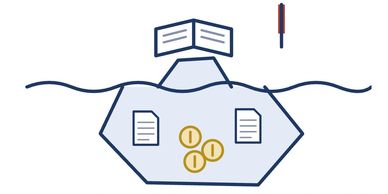
What the training covers. How to identify and record the debts and promises that do not appear in the budget, including loan guarantees, public private partnership commitments, pending bills and the debts of state owned enterprises. How debt service and the conditions attached to borrowing take up the budget before new spending is funded. Why approved budgets are not always spent, and how cash shortages create arrears. How to price a government guarantee and set aside provisions for it. How fiscal rules work and why some are enforced while others are ignored.
County Finance and Devolution

What the training covers. How revenue is shared between national and county governments, and how to build the case for a larger share. How the county revenue sharing formula is constructed and how changes to it move money between counties, worked through with real figures. The taxes, fees and charges a county may lawfully impose and how to design them so they withstand a court challenge. Property rates and valuation rolls as a source of own source revenue. County borrowing and the hidden liabilities in leases, pensions and pending bills.
Tax Design and Domestic Resource Mobilisation
What the training covers. How to measure tax expenditures, the revenue lost through exemptions and incentives, and how to decide which to keep or repeal. How to tax high net worth individuals, including income and assets held offshore and the structures used to hide them. How to bring small and informal businesses into the tax system using simplified regimes and mobile money and digital payment data. How to forecast what a tax change will raise once taxpayers change their behaviour. How green, extractive and solidarity levies, including zakat, fit within the law and the budget.
International Taxation and Tax Treaties
What the training covers. How to review a country's double taxation treaties to find where revenue is lost, and how to decide which treaties to renegotiate first. Taxing rights over service fees, capital gains and the offshore indirect transfer of local assets. Anti-abuse rules, including the principal purpose test and limitation of benefits, applied to real cases. The OECD global minimum tax under Pillar Two, what to legislate and what it will raise. The United Nations Framework Convention on International Tax Cooperation negotiations and the African positions within them.
Transfer Pricing and Profit Shifting
What the training covers. How multinational groups shift profit through the prices charged between related companies, and how to detect it. Pricing intangibles such as brands, patents and know-how. Intra-group loans, guarantees and interest deductions used to strip profit. How to conduct a transfer pricing audit when there are no local comparable companies. How to defend an adjustment through documentation, dispute settlement and litigation.
Illicit Financial Flows and Asset Recovery
What the training covers. How illicit financial flows are measured and what the estimates can and cannot show. Trade misinvoicing and the mispricing of minerals and commodities. Beneficial ownership, and how to trace the real owner behind shell companies and nominees. Following money across borders and building evidence that holds up in court, including through mutual legal assistance. Freezing, confiscating and repatriating stolen assets, and coordinating the revenue, customs, financial intelligence, anti-corruption and prosecution agencies involved.
Red Flags in Government Contracts
What the training covers. How to read government contracts, including concessions, mining and energy agreements and public private partnerships, to spot the clauses that will cost the public purse before they are signed. Stabilisation clauses that freeze tax and regulatory changes for decades, and what they cost. When a change in tax or policy can lead to an investor state arbitration claim, and how to defend against it. Managing guarantees, indemnities and contingent liabilities across government. Renegotiating and repairing contracts already in force, and drafting protective clauses.
Fiscal Law and Legislative Drafting
What the training covers. How to interpret tax legislation and why enacted laws fail in practice. General and specific anti-avoidance rules and how the courts have applied them. How to draft provisions that close existing avoidance schemes and anticipate new ones. How a new law interacts with tax treaties and with subsidiary legislation. How to estimate the revenue cost of a bill and the compliance burden it places on taxpayers.
Understanding the Digital Economy and its Taxation
What the training covers. What the digital economy is and why value created in one country is often taxed elsewhere or not at all. How digital business models earn money, covering platforms, online advertising, streaming, cloud services, the gig economy, apps and crypto assets. Which tax instrument fits each model, including VAT on digital services, digital services taxes and withholding taxes. How to require platforms to collect tax and how to enforce against companies with no physical presence. Transfer pricing of data and software, and algorithmic and high frequency trading.
Tax Equity, Gender and Algorithms
What the training covers. Tax incidence, meaning who bears a tax once it is passed on to consumers or workers. How to model the effect of a tax reform on different households and businesses before it is adopted. How taxes affect women differently, including women in informal trade and unpaid care work. How to audit automated systems used to score taxpayers or welfare claims for bias in their data and design. Explainability, human oversight and accountability when an automated decision is wrong.
Fiscal Data, Foresight and the Regulation of Innovation
What the training covers. How to use the data a government already holds for compliance risk scoring, early warning and audit case selection. Revenue forecasting under uncertainty and how to present the limits of a forecast to decision makers. Microsimulation and economic modelling to test a policy before it is adopted. Regulatory sandboxes for financial technology, with clear limits, consumer protections and exit rules. Governing the use of artificial intelligence in revenue and regulatory bodies while protecting privacy and rights.
working with Governments
Angola
Trained the Angola Revenue Administration on QDMTT and revenue assessment of petroleum companies to determine tax compliance.
Bhutan
Trained Bhutan's Members of Parliament, Department of Revenue and Customs on taxing the digital economy, identifying illicit financial flows and linking taxation to the achievement of the SDGs
Djibouti
Trained Djibouti Revenue Authority and Ministry of Education on developing tax policies to address SDG 4 - Quality Education
Eswatini
Trained Eswatini's Ministry of Finance, Eswatini Revenue Service and the Revenue Appeals Tribunal of Eswatini on international taxation and transfer pricing rules.
Ghana
Trained Ghana's Ministry of Finance and Ghana Revenue Administration on aligning tax policy to the achievement of the SDGs and curbing IFFs, auditing their tax measures and proposing new tax measures to achieve SDG 4- quality education.
Kenya
Ttrained the Premier Tax Office of the Kenya Revenue Authority on financial planning and wealth management strategies by the high-net-worth individuals, to support them in drafting their HNWI tax compliance risk profiling strategy and creating a checklist to support their investigation and tackling illicit financial flows.
Lebanon
Trained Lebanon's Ministry of Finance and Tax and Customs on assessing the extent to which their tax system enables income and wealth inequality and supported them in developing new tax measures to achieve SDG 10- reducing inequalities.
Malawi
Trained Malawi Revenue Authority on spotting tax avoidance schemes and maximising on tax compliance.
Sri Lanka
Tained Sri Lankan prosecutors, Financial Intelligence Unit, customs officials, and Ministry of Finance on investigating IFFs and prosecution strategies.
Tanzania
Trained Tanzania Revenue Authority, and Ministry of Finance on the taxation of the digital economy and how to implement digital service taxation.
Uzbekistan
Trained Uzbekistan's Ministry of Economy Planning and Finance and the State Tax Committee on aligning tax policy with the SDGs and curbing IFFs, on eliminating double taxation with respect to Islamic financial instruments and on structuring green sukuk.
Zimbabwe
Trained Zimbabwean officers from FIU, immigration, prosecutors and customs on IFFs and AfCFTA implications concerning cross border trade.
working with CSOs
Red Flags in Debt Contracts, Cote D'Ivoire
Trained over 70 participants on spotting red flags when reading debt contracts and developing advocacy strategies for public awareness.
Basics of Taxation and Global Governance of Tax, Ghana
Trained over 90 feminists on understanding the basics of taxation, international tax rules and illicit financial flows.
Wealth Taxation, Kenya
Trained participants on understanding forms of wealth, approaches to taxing wealth and wealth management strategies used to avoid taxation.
Trade, Tax and Gender Implications, Mozambique
Trained over 150 participants on the impact of cross border trade policies, WTO rules on women informal traders and issues around tax injustices.
Legal Foundations of Debt, South Africa
Trained over 100 participants from civil society, media and youth groups on understanding the legal foundation of debt.
Transfer Pricing, Tanzania
Trained over 80 participants on understanding the transfer pricing rules and their abuse.
Taxing the Digital Economy, Zambia
Trained over 100 participants on understanding the digital economy, its business models and its various points of income/profit making
Understanding the Digital Architecture, Ethiopia
Trained over 40 participants on understanding the architecture within which the digital economy operates and is taxed
Own Source Revenue Reporting, Kenya
Trained over Nairobi county government on developing its own source revenue reporting template to support public participation around oversight on revenue mobilisation and expenditure.
Engagement with Academia
Jigme Singye Wangchuck School of Law, Bhutan
Delivered a lecture on the problem of illicit financial flows, tax treaty abuses and impact on tax systems.
KoGuan School of Law School, China
Delivered a lecture on digital health governance and problems emerging around surveillance and data colonialism.
University of Colombo, Sri Lanka
Delivered a master class on the interconnections between taxation, digitalisation and financing the SDGs.
University of Warwick, UK
Delivered a lecture on regulatory sandboxes for fintech taxation
Cardiff University, UK
Delivered a lecture on the problem of base erosion and profit shifting
University of Lome, Togo
Delivered a lecture on the intersections across tax and the achievement of the SDGs